Brushing is the grooming job owners do most and get the least instruction on. Most people brush the top of the dog, in the direction the hair lies, for about a minute, and conclude the dog is brushed. For many coats that routine does almost nothing where it matters, down at the skin.
In Kings Mountain, groomers at Washin' Up Pups can usually tell a home brushing routine from the coat itself. This myth-versus-fact sorting covers which tools suit which coats, what line brushing actually is, and the short routine that prevents most mats between full grooms and haircuts.
The tools, honestly described
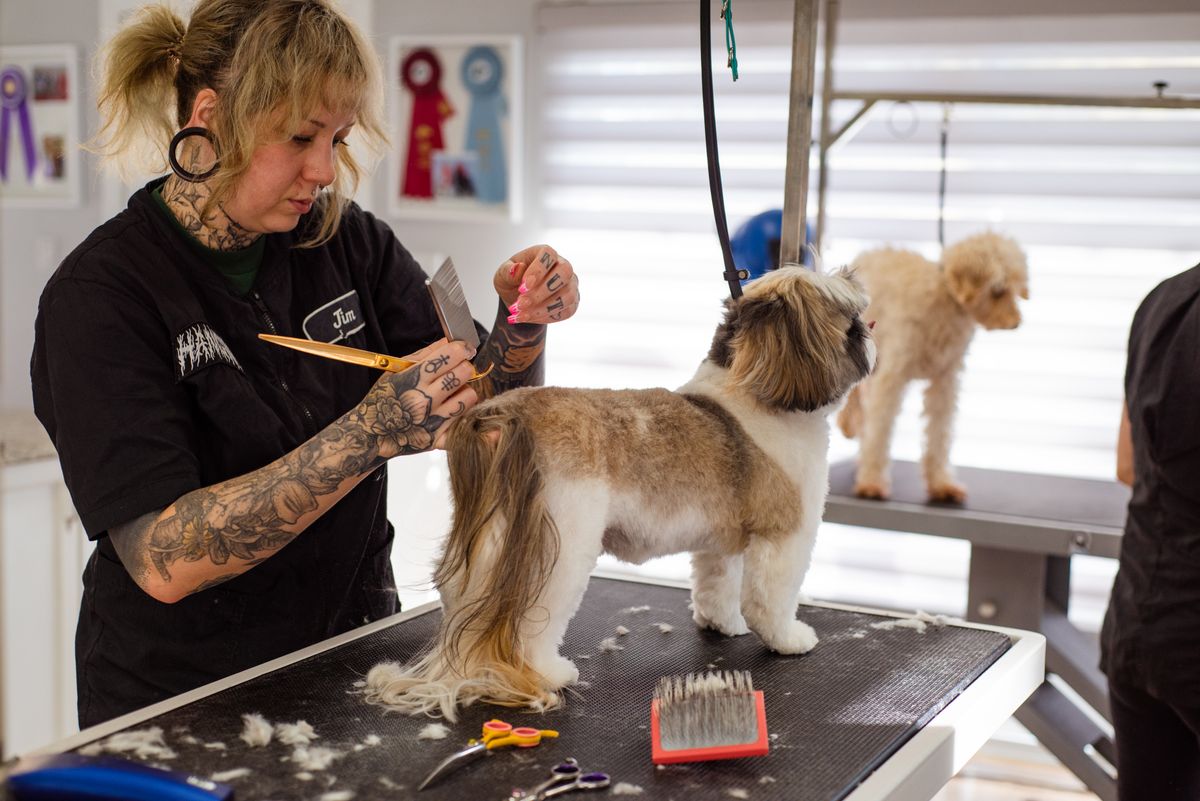
A slicker brush has fine, angled wire pins and is the workhorse for removing loose hair and working out tangles in medium, long, curly, and double coats. A pin brush has straight pins on a cushion and is gentler for long, silky coats and for dogs that dislike the slicker feel. A metal comb is not optional equipment for longer coats: it is the inspection tool that proves whether brushing reached the skin. A rubber curry or short bristle brush is all most smooth coats need, loosening shed hair and distributing oils. A de-shedding tool can help double coats during the spring and fall blow, used as directed, since overuse can cut and thin the coat.
Myths and facts about brushing
| Claim | Verdict | Why |
|---|---|---|
| If the top looks smooth, the dog is brushed out | False | Mats form at the skin under a smooth top layer. Only a comb passed to the skin tells the truth. |
| One good brush works for every coat | False | Smooth coats need a curry, double coats need a slicker and comb, and silky coats do better with a pin brush and comb. |
| Brushing a double coat ruins it | False | Brushing removes shed undercoat and helps the coat insulate. Shaving a double coat is the controversial step, not brushing it. |
| More pressure means a better brush-out | False | Hard pressure causes brush burn and teaches the dog to hate the routine. Short, light strokes in layers work better. |
| Short-haired dogs do not need brushing | Mostly false | They mat rarely, but weekly brushing still cuts shedding around the house and lets you check skin, ticks, and lumps. |
| You should brush a wet coat to save time | It depends | Wet tangles tighten and felt. Brush out before the bath and again after the coat is fully dry. |
Line brushing, in plain terms
Line brushing is how groomers reach the skin on a thick or long coat. You part the hair in a line, hold the hair above the line up with one hand, and brush the exposed layer downward in short strokes, working from the tips toward the skin. Then you move the line and repeat, section by section. It feels slow the first time and then becomes the only method that makes sense, because surface brushing over a dense coat mostly polishes the top.
Follow with the comb test in each section. Where the comb glides, you are done. Where it snags, that spot needs more work before you move on. Behind the ears, under the collar, in the armpits, and at the backs of the legs deserve the comb test every session, since those friction spots mat first.
The five-minute routine that prevents mats
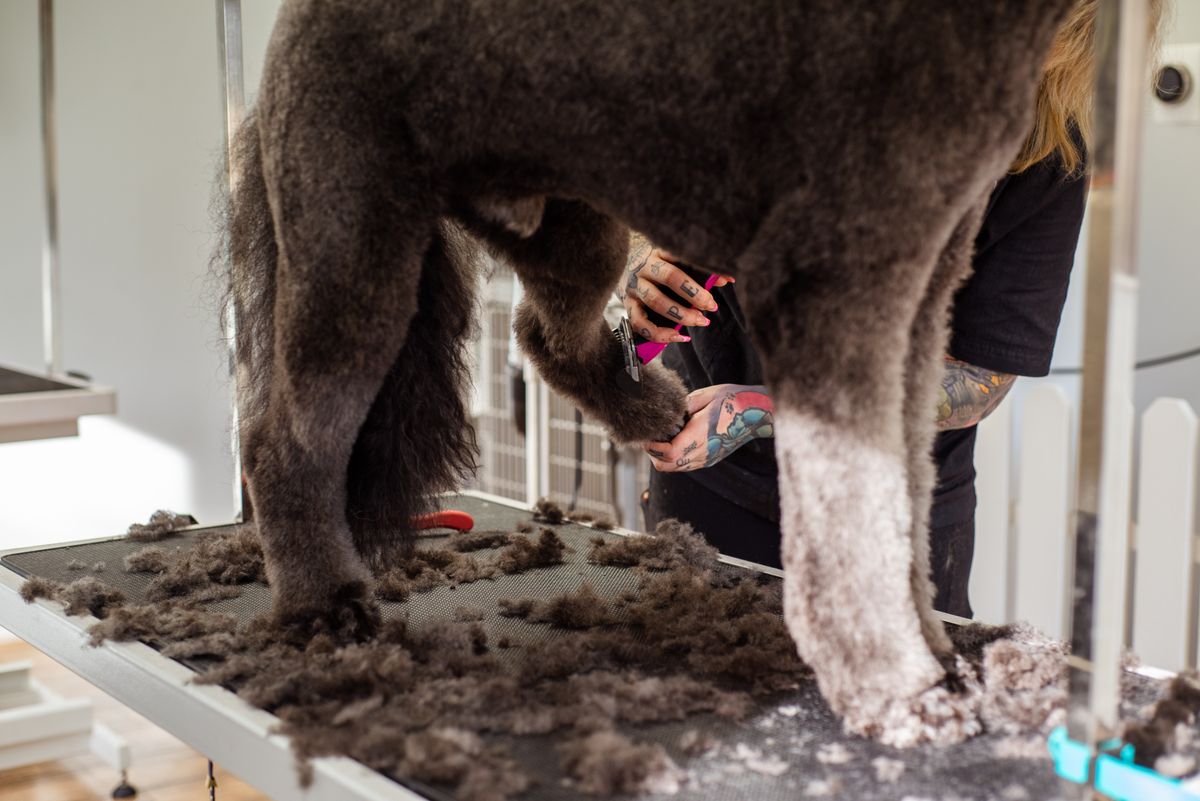
Frequency beats duration. Five focused minutes a few times a week prevents more mats than an hour once a month, because tangles are easy in their first days and stubborn later. Pick a calm moment, not right after a walk. Start where the dog minds least, work the friction spots, run the comb test, and stop before the dog gets restless. Treats and a consistent spot and time help the routine become ordinary, which is the whole goal.
Adjust by coat. A curly coat kept long may need those five minutes most days. A double coat needs steady attention during the spring and fall shed and less in between. A smooth coat needs a minute with a curry once a week. If your routine keeps failing in the same spots, tell your groomer. Often the fix is a slightly shorter length in just those areas, which nobody sees and the dog feels immediately.
Signs to stop and get help
Stop brushing and look closer if you find skin that is red, hot, or sore, a lump you have not noticed before, or a mat tight to the skin that makes the dog flinch. Working harder on any of those causes pain and sometimes injury. Tight mats, skin problems, and new lumps belong with a groomer or veterinarian, not with more pressure at home.
Common questions
What is the one brush I should buy first?
For most medium and long coats, a slicker brush plus a metal comb covers the real work. The comb matters as much as the brush because it proves whether you reached the skin.
How often should I brush my dog at home?
A few short sessions a week suits most coats, daily for long curly coats kept at length, and about weekly for smooth coats. During the spring and fall shed, double coats need more.
My dog hates being brushed. What helps?
Shorter sessions, light pressure, starting where the dog minds least, and stopping before restlessness all help. Pain from existing mats is a common hidden cause, so rule that out first.
Photos in this guide are representative stock images.
← All guides from Washin' Up Pups← Back to Washin' Up Pups