Some dogs arrive at the groomer relaxed and leave the same way. Others shake in the car, pull back at the door, and spend the appointment braced for the dryer. Anxiety at the groomer is common, it is not a character flaw in the dog or a failure by the owner, and it usually improves with pacing and practice rather than with one heroic effort.
Season matters more than people expect in Kings Mountain. Puppies starting out in spring, dogs facing a first groom before summer boarding, and nervous dogs booked during the busy holiday rush all face different pressures. Washin' Up Pups offers a puppy's first groom among its services, and the principles below apply to anxious adults as well as beginners.
What groomers do differently for anxious dogs
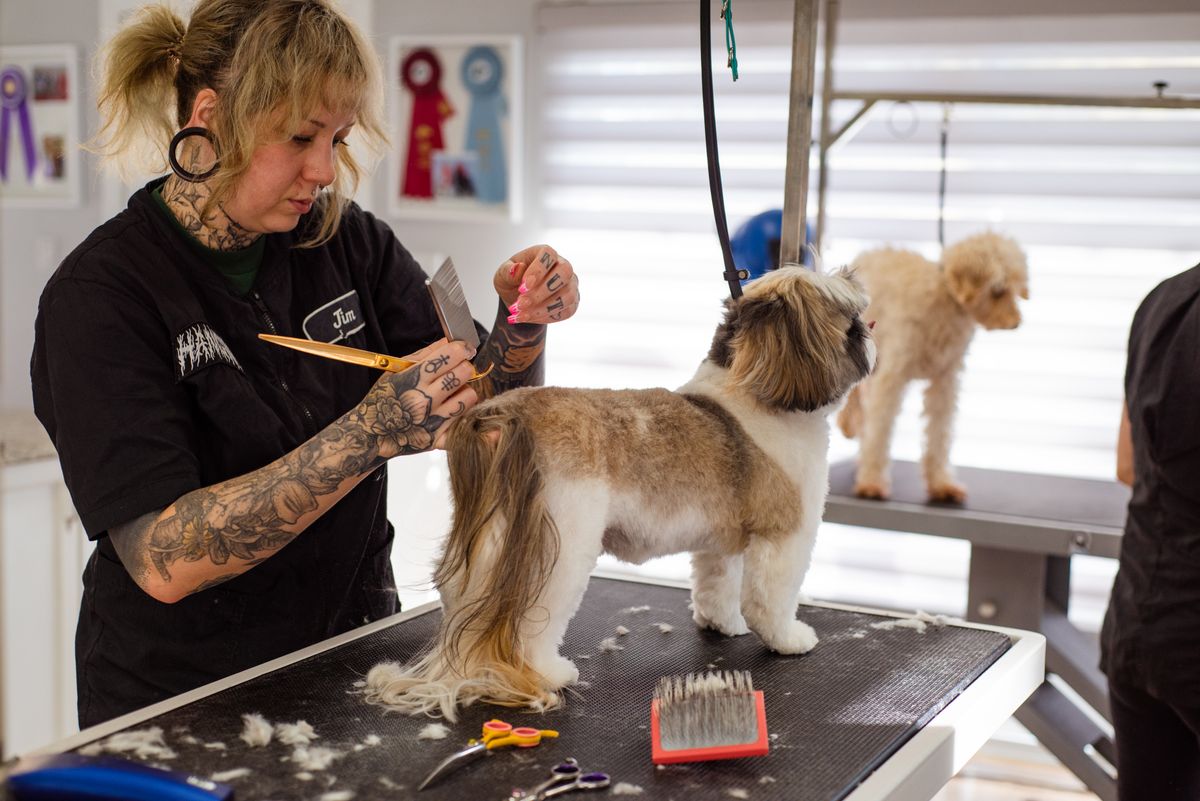
Pacing is the main tool. A nervous dog may get breaks between steps, a quieter appointment slot, the dryer on a lower setting or a longer towel dry, and handling that pauses when the dog's stress climbs rather than pushing through to finish faster. Sometimes the plan is to split the work: nails and a bath today, the haircut another day, so no single visit asks for everything at once.
Good information helps the groomer pace well. Say plainly what your dog fears most, whether that is the dryer noise, nail trims, other dogs, or being away from you. Mention past bad experiences and anything that reliably calms your dog. That briefing takes a minute and changes the whole appointment for the better.
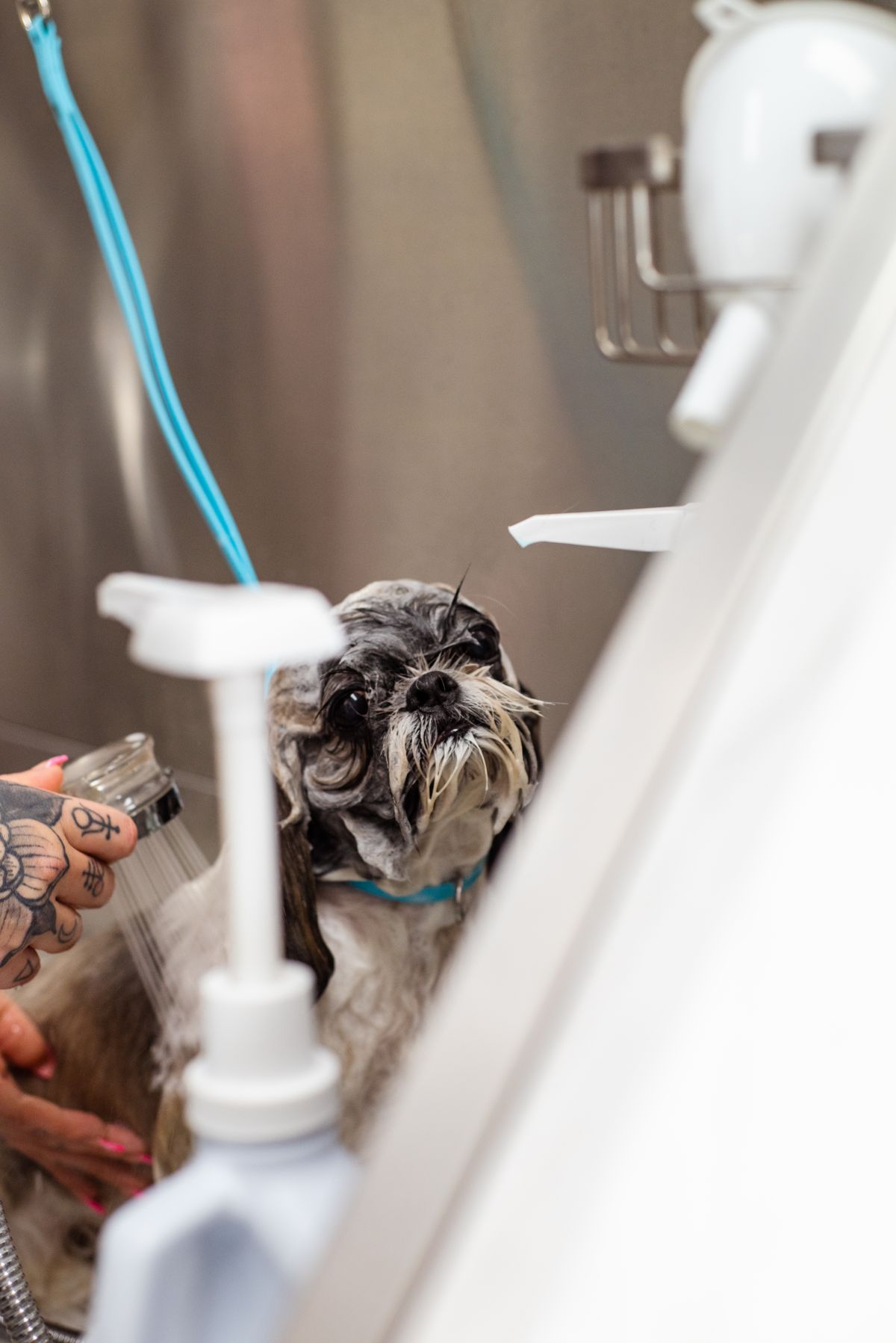
Practice you can do at home, by season
Desensitization works in small, repeated doses below the level that frightens the dog. In spring, when many puppies get first grooms, keep sessions very short and frequent. Before summer, when boarding and more frequent baths arrive, practice the bath and dryer sounds at home so the salon is not the first exposure. In the fall, before the busy holiday grooming rush, book nervous dogs earlier in the season and earlier in the day when salons are quieter. In winter, keep up short handling practice even when grooms are spaced out, so skills do not fade between appointments.
Home practice checklist for a calmer groom
- Handle paws daily for a few seconds, gently spreading toes, then reward and stop.
- Brush in short sessions in the spots the groomer will work, ending before the dog gets restless.
- Play recorded dryer and clipper sounds quietly during calm moments, raising volume slowly over days.
- Practice standing on a raised, non-slip surface like a bath mat on a low table, with support and treats.
- Run a calm bath at home with lukewarm water and a quick towel dry, keeping it brief and positive.
- Take short car rides that end somewhere pleasant, so the car does not only mean appointments.
- Visit the salon parking area or lobby briefly when allowed, then leave without a groom.
Reading your dog's stress honestly
Early stress signs are quiet: lip licking, yawning, turning the head away, ears pinned, a tucked tail, and panting in a cool room. A dog showing those signals is asking for a slower pace, and practice sessions should end while the dog is still coping, not after panic. Growling and snapping are late signals and useful information, never behavior to punish. A dog that warns is telling you exactly where its limit is.
Progress is usually gradual and uneven. A dog may accept the bath, then struggle with nails for months, then improve suddenly. Judge the trend over several appointments, and tell the groomer what improved at home so the salon plan can build on it.
About sedation and calming products
Owners often ask about calming treats, pheromone products, and prescription medication. Mild products help some dogs take the edge off, and that is a reasonable experiment to discuss with your veterinarian. Prescription anxiety medication is also a legitimate option for genuinely panicked dogs, arranged through a veterinarian who knows the dog, with the groomer informed in advance. What does not work is springing a sedated dog on a groomer without warning, or expecting medication to replace practice entirely. The goal is a dog that copes, with whatever support its veterinarian thinks is appropriate.
When anxiety needs a different plan
A dog that panics to the point of risking injury, bites, or cannot be handled safely needs a team approach: veterinarian first, possibly a certified behavior professional, and a groomer willing to work in short training visits. Saying a dog is not ready for a full groom today is not a rejection. It is the start of a plan that protects the dog, and most anxious dogs improve substantially once everyone works from the same script.
Common questions
How long does it take an anxious dog to get used to grooming?
It varies widely. Many dogs improve noticeably over three to five paced appointments with home practice between them. Deep fears take longer, and progress is rarely a straight line.
Should I stay with my dog during the groom?
Usually the groomer will advise based on your dog. Many dogs settle better working directly with the groomer, while some young puppies do well with an owner nearby at first. Ask what the salon prefers.
My dog only fears the dryer. Can that be worked around?
Often yes. Lower settings, a longer towel dry, ear coverings made for dogs, and gradual sound practice at home all help. Tell the groomer the dryer is the issue so the appointment is paced around it.
Photos in this guide are representative stock images.
← All guides from Washin' Up Pups← Back to Washin' Up Pups